


About Us
Discover our journey and values.
orem Ipsum is simply dummy text of the printing and typesetting industry. Lorem Ipsum has been the industry's standard dummy text ever since the 1500s, when an unknown printer took a galley of type and scrambled it to make a type specimen book. It has survived not only five centuries, but also the leap into electronic typesetting, remaining essentially unchanged. It was popularised in the 1960s with the release of Letraset sheets containing Lorem Ipsum passages, and more recently with desktop publishing software like Aldus PageMaker including versions of Lorem Ipsum.
orem Ipsum is simply dummy text of the printing and typesetting industry. Lorem Ipsum has been the industry's standard dummy text ever since the 1500s, when an unknown printer took a galley of type and scrambled it to make a type specimen book. It has survived not only five centuries, but also the leap into electronic typesetting, remaining essentially unchanged. It was popularised in the 1960s with the release of Letraset sheets containing Lorem Ipsum passages, and more recently with desktop publishing software like Aldus PageMaker including versions of Lorem Ipsum.

Our Services
See all services
Comprehensive solutions tailored for you.
Desktop Application Development
Lorem Ipsum is simply dummy text of the printing and typesetting industry. Lorem Ipsum has been the industry's. Lorem Ipsum is simply dummy text of the printing and typesetting industry. Lorem Ipsum has been the industry's
View more

MERN Stack Application Development
Lorem Ipsum is simply dummy text of the printing and typesetting industry. Lorem Ipsum has been the industry's. Lorem Ipsum is simply dummy text of the printing and typesetting industry. Lorem Ipsum has been the industry's
View more
PHP Web Application Development
Lorem Ipsum is simply dummy text of the printing and typesetting industry. Lorem Ipsum has been the industry's
View more
Our Achievements
Numbers that speak for our success.
Partners
Projects
Clients
Delivery Highlights
Focused advantages that shape stronger digital outcomes.
Fortified Security
Implementing Zero Trust protocols to eliminate emerging cyber threats.
Green Infrastructure
Powering global data centers with 90% renewable energy sources.
AI Evolution
Deploying predictive intelligence to automate complex enterprise workflows.
Contact Us
orem Ipsum is simply dummy text of the printing industry.
Client Reviews
What our customers say about us.
Trusted By
Signals of confidence, recognition, and long-term partnership.





Client Reviews
Trusted feedback and lived experience from our delivery partnerships.
Trusted By
Signals of confidence, recognition, and long-term partnership.



Trusted By
Signals of confidence, recognition, and long-term partnership.
Proven Results
Delivering high-impact digital products with measurable success metrics.
Scalable Solutions
Flexible technology that grows alongside your business requirements.

Expert Support
Dedicated assistance available around the clock for every client.
Featured Products
See all solutions
Explore our latest offerings.
Solution
eCommerce Website & Mobile Apps
eCommerce Solution
Solution
Online Examination Software
Online Exam Management

Solution
College Management System
Online exam management system

Solution
School Management System
Lorem Ipsum is simply dummy text of the printing and typesetting industry. Lorem Ipsum has been the industry's standard dummy text ever since the 1500s, when an unknown printer took a galley of type and scrambled it to make a type specimen book. It has survived not only five centuries, but also the leap into electronic typesetting.
Lorem Ipsum is simply dummy text of the printing and typesetting industry. Lorem Ipsum has been the industry's standard dummy text ever since the 1500s, when an unknown printer took a galley of type and scrambled it to make a type specimen book.
Our Portfolio
View portfolio
A showcase of our successfully completed projects.

Graphics Design
Graphics Designing
Lorem Ipsum is simply dummy text of the printing and typesetting industry.

Web Application
Website Development
Lorem Ipsum is simply dummy text of the printing and typesetting industry.

Web Application
eCommerce Website
Lorem Ipsum is simply dummy text of the printing and typesetting industry.
Leadership
Meet the people behind delivery, strategy, and execution.

Shruti Singh
Manager

Jhon Doe
IT Manager

Rakesh Sharma
Co-Founder

Priti Singh
CEO & Founder
Latest News
Browse insights
Stay updated with our recent articles.
07 May
Blogs
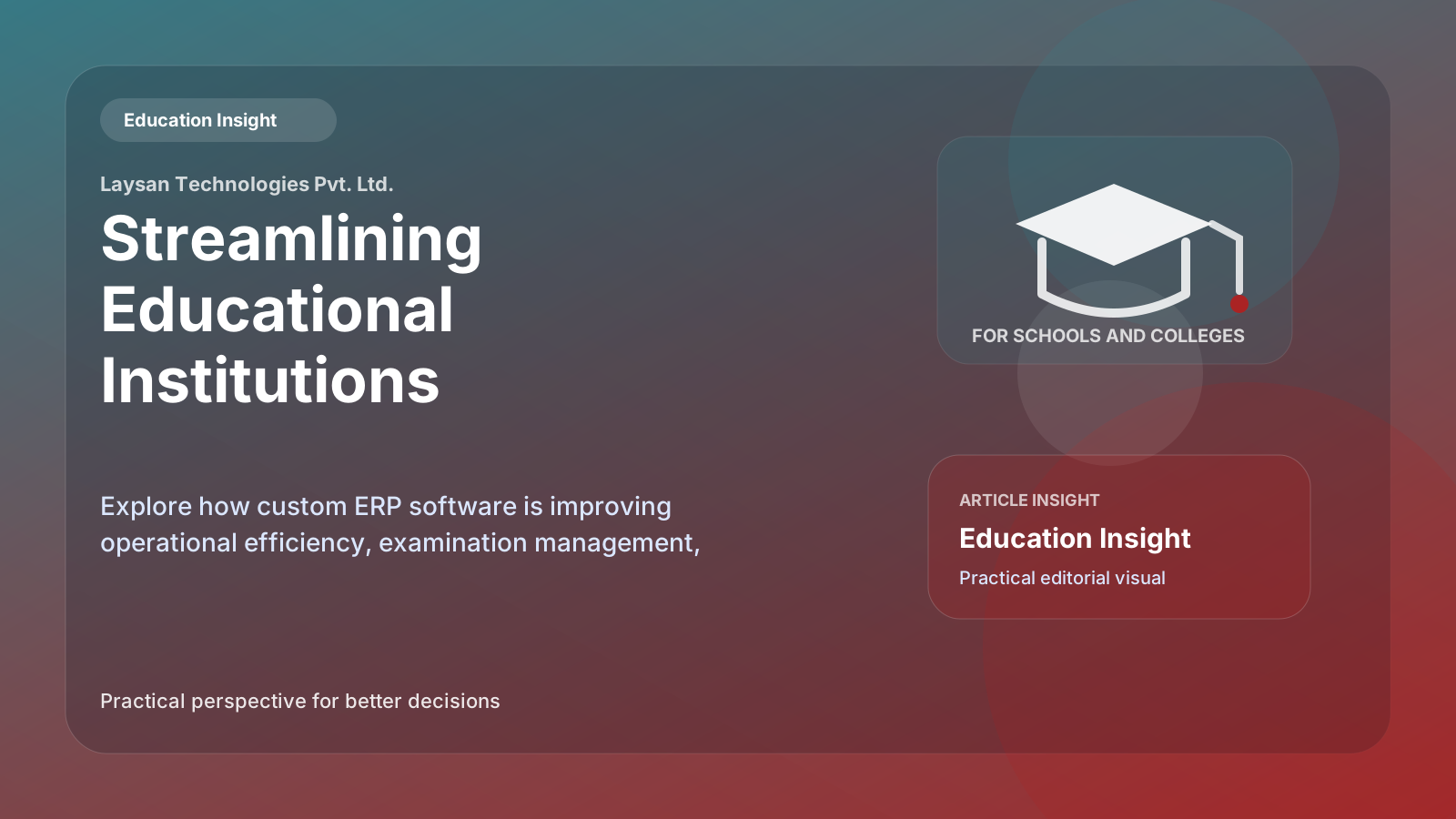
How Custom ERP Software is Transforming School and College Management in India in 2026
Educational institutions in India are increasingly under pressure to deliver quality education while managing complex administrative tasks efficiently. In 2026, the adoption of custom ERP (Enterprise Resource Planning) software tailored specifically for schools and colleges is making a marked difference in streamlining operations and improving academic outcomes.
Understanding the Challenges in Educational Management
Many schools and colleges still rely on fragmented systems or manual processes to handle student data, attendance, examination scheduling, fee collection, and reporting. This leads to inaccuracies, delays, and increased administrative workload. Additionally, managing examinations—question paper setting, online/offline assessments, result processing—requires special attention to security and accuracy.
Why Custom ERP Software is a Practical Solution
Off-the-shelf software solutions often do not fully align with the unique workflows of Indian educational institutions. Custom ERP software development allows tailoring features according to specific needs such as local compliance, language preferences, integration with biometric attendance systems, and seamless handling of online examination services.
- Integrated Modules: From admission to alumni management, all functions operate within a unified platform.
- Examination Management: Secure online/offline exam conduction, on-screen marking, automated result processing, and question bank management.
- Attendance Automation: Integration with biometric attendance systems reduces manual errors and enhances monitoring.
- Financial Management: Automated fee collection, inventory management, and payroll simplify financial operations.
- Reporting and Analytics: Real-time dashboards and customized reports support data-driven decision-making.
Key Considerations When Selecting Custom ERP Solutions
For decision-makers and administrators, evaluating potential ERP solutions involves more than just feature lists:
- Scalability: Can the software grow with your institution’s expanding needs?
- User Experience: Is the interface intuitive for staff and students, including mobile accessibility?
- Integration Capabilities: Does the ERP integrate with existing hardware like biometric devices or other software?
- Security: How does the system handle data privacy, especially for examination content and student records?
- Support and Training: Is there ongoing technical support and training to ensure smooth adoption?
Implementation Best Practices for Indian Educational Institutions
Successful ERP deployment requires careful planning:
- Needs Assessment: Map out all institutional processes and pain points before development.
- Stakeholder Involvement: Engage faculty, administrators, and IT staff for feedback during design and testing phases.
- Phased Rollout: Start with core modules such as admission and attendance before adding advanced exam management features.
- Training Programs: Conduct comprehensive training sessions to build user confidence.
- Data Migration: Plan and execute safe transfer of historical data to the new system.
FAQ / Practical Takeaway
Q: How does custom ERP software improve examination accuracy?
By automating question paper setting, secure distribution, online/offline exam conduction, and on-screen marking, ERP systems reduce manual errors and improve result reliability.
Q: Is it costly to develop custom ERP software for a school or college?
Costs vary based on features and scale, but custom solutions can be more cost-effective long term by reducing repetitive manual work and improving operational efficiency.
Q: Can a custom ERP system integrate with biometric attendance devices?
Yes, integration with biometric attendance and other hardware is a common feature tailored to Indian institutional requirements.
In 2026, investing in custom ERP software development is a practical step for Indian schools and colleges aiming to modernize operations, reduce administrative burdens, and enhance the overall educational experience. Collaborating with experienced development partners who understand local challenges can ensure a solution that is both effective and sustainable.
07 May
Blogs
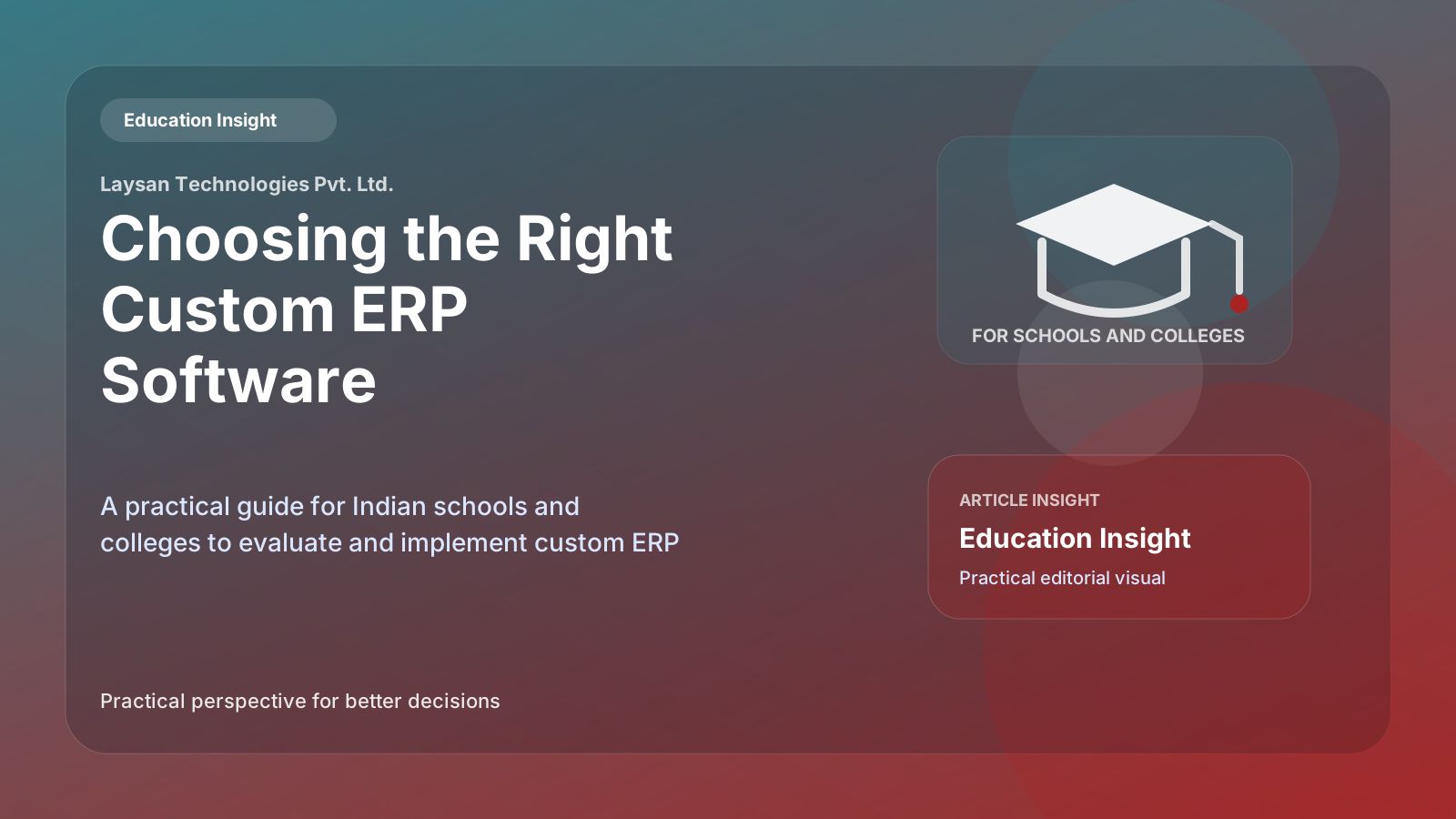
How Indian Schools and Colleges Can Select the Right Custom ERP Software in 2026
Educational institutions in India are increasingly turning to custom ERP software to streamline their administrative and academic processes. In 2026, with rising demands for compliance, automation, and better user experience, selecting the right ERP solution has become critical. This article offers a practical guide for school and college administrators to navigate this decision effectively.
Understanding Why Custom ERP Software Matters for Indian Educational Institutions
Unlike off-the-shelf software, custom ERP solutions can be tailored to the unique processes and regulatory requirements of Indian schools and colleges. These platforms integrate modules such as admissions, attendance, examinations, fee management, and human resources into a single system, ensuring data consistency and real-time visibility.
Key benefits include:
- Process automation: Reduces manual errors and administrative workload.
- Regulatory compliance: Supports adherence to government education policies and reporting standards.
- Improved communication: Facilitates interaction between students, faculty, and administration through centralized dashboards and mobile apps.
Common Challenges Indian Institutions Face Without Custom ERP
Many institutions still rely on fragmented software or manual systems, leading to:
- Data duplication and inaccuracies.
- Delayed result processing and examination management.
- Inefficient fee collection and inventory tracking.
- Poor attendance monitoring and lack of integration with biometric systems.
Custom ERP systems, developed by companies experienced in education technology like Laysan Technologies Pvt. Ltd., address these pain points by offering integrated solutions such as biometric attendance systems, online examination software, and result processing modules designed specifically for Indian institutions.
Key Factors to Evaluate When Selecting Custom ERP Software
- Requirement Analysis: Engage stakeholders—including administrators, faculty, and IT staff—to map current workflows and pain points. This ensures the ERP solution aligns with actual needs rather than assumptions.
- Modularity and Scalability: Choose software that allows modules to be implemented progressively and supports future growth, such as adding new courses or departments without disruption.
- Compliance and Reporting: Verify that the software supports formats and standards mandated by Indian education authorities, such as CBSE, ICSE, or university guidelines, simplifying audits and accreditations.
- User Experience: Intuitive interfaces for administrators, teachers, students, and parents are essential. Mobile app integration enhances accessibility, especially for remote communication.
- Integration Capability: The ERP should seamlessly connect with existing systems like digital attendance devices, examination management tools, and accounting software.
- Security and Data Privacy: Ensure compliance with India’s data protection laws and implement role-based access controls to protect sensitive student and staff information.
- Vendor Support and Customization: Select a software development company that offers ongoing support, training, and customization. Laysan Technologies, for instance, provides end-to-end services including development, deployment, and user training tailored to Indian institutions.
Implementation Best Practices to Ensure Success
Rolling out a custom ERP requires careful planning to minimize disruption and encourage adoption:
- Pilot Testing: Start with a pilot in one department to identify issues and gather user feedback before a full rollout.
- User Training: Conduct comprehensive training sessions for all user groups, supported by documentation and helpdesk services.
- Data Migration: Clean and standardize existing data to ensure accuracy when transferring to the new system.
- Phased Rollout: Implement module by module, allowing users to adapt gradually.
- Regular Feedback Loops: Establish channels for continuous feedback and quick resolution of challenges during initial months.
FAQ: Common Concerns When Choosing Custom ERP Software
- Q: How long does custom ERP software development usually take?
Typically, development and deployment can span from 3 to 9 months, depending on complexity and customization needs. - Q: Can custom ERP software integrate with biometric attendance systems?
Yes, many ERP solutions offer native or API-based integration with biometric devices, enhancing attendance accuracy. - Q: Is cloud-based ERP suitable for Indian schools and colleges?
Cloud ERP offers benefits like remote access and reduced infrastructure costs but requires stable internet connectivity. Hybrid models are also available. - Q: How to evaluate the cost versus benefits?
Consider long-term savings from reduced manual work, compliance risk mitigation, and improved data accuracy over initial investment costs.
Conclusion
For Indian educational institutions aiming to modernize operations in 2026, investing in the right custom ERP software can deliver meaningful improvements in efficiency, compliance, and user satisfaction. By carefully assessing needs, prioritizing integration, and partnering with experienced vendors, schools and colleges can build scalable systems that support growth and evolving education standards.
Laysan Technologies Pvt. Ltd. is one among several providers offering tailored ERP, examination, and management solutions designed with the Indian education sector in mind, combining technology expertise with practical implementation support.
07 May
Blogs
Why Indian Educational Institutions Should Invest in Integrated Examination Management Systems in 2026
In India, educational institutions are increasingly challenged to conduct examinations efficiently, securely, and transparently. The rising number of students, evolving government guidelines, and the demand for accurate, timely results have made manual or fragmented exam processes unsustainable. Integrated examination management systems (EMS) are emerging as practical solutions that address these challenges while improving overall academic administration.
Understanding Integrated Examination Management Systems
An integrated EMS combines multiple examination-related functions into a single digital platform. These typically include online/offline exam scheduling, question bank management, online and on-screen marking, biometric attendance tracking, and result processing. The goal is to streamline exam workflows, reduce administrative burdens, and improve accuracy and security.
Why Indian Schools and Colleges Are Adopting EMS in 2026
- Handling Growing Student Populations: With student numbers increasing rapidly, manual exam management becomes error-prone and resource-intensive. EMS solutions help automate routine tasks like roll number generation, seating arrangements, and attendance tracking.
- Regulatory Compliance and Transparency: The National Education Policy and various state boards emphasize transparency and fairness in examinations. EMS platforms provide audit trails and secure data handling that meet regulatory requirements.
- Reducing Paper Usage and Costs: Many EMS support digital question paper setting, online exams, and on-screen marking systems, markedly reducing the dependency on paper and printing costs.
- Faster and Accurate Result Processing: Automated result compilation and error checking expedite announcement timelines and reduce manual calculation errors, a common concern in large-scale exams.
- Improved Security: Features like biometric attendance systems, GPS tracking for exam material transportation, and CCTV monitoring enhance examination security and reduce malpractices.
Common Challenges in EMS Implementation and How to Address Them
Despite clear advantages, implementing an integrated EMS in Indian educational contexts requires careful planning:
- Infrastructure Limitations: Many institutions, especially in semi-urban or rural areas, face inconsistent internet connectivity. Hybrid EMS solutions that support both online and offline modes can help mitigate these issues.
- Training and Change Management: Adoption depends on training administrators, teachers, and examiners effectively. Partnering with technology providers who offer training and ongoing support is vital.
- Data Privacy and Security Concerns: Institutions must ensure that software providers comply with data protection norms and implement encryption and access controls.
- Customization Needs: Indian institutions often require localized features, such as regional language support, integration with existing ERP systems, or compliance with board-specific rules. Custom software development can tailor EMS for these requirements.
Evaluating Examination Management Software Providers in India
When selecting an EMS provider, schools and colleges should consider:
- Comprehensive Feature Set: Look for a solution that covers the full exam lifecycle—question bank, scheduling, attendance, marking, result processing, and reporting.
- Scalability: The software should handle large student volumes without performance degradation.
- User Experience: Intuitive interfaces for administrators, teachers, and students reduce errors and improve adoption rates.
- Integration Capabilities: The EMS should integrate seamlessly with existing school or college management systems, biometric attendance, and printing solutions like barcode or label printing for admit cards.
- Support and Training: Providers offering onsite or remote training, timely technical support, and regular updates facilitate smoother transitions.
- Cost-effectiveness: Consider total cost of ownership including implementation, licensing, training, and maintenance.
Practical Takeaways for Indian Education Leaders
- Start with a thorough needs assessment: Understand your current exam challenges and future scalability needs before choosing a system.
- Prioritize security and compliance: Ensure that the software aligns with government and board guidelines, especially regarding data privacy and exam integrity.
- Plan for phased implementation: Pilot the EMS in one department or exam before full-scale rollout to identify and resolve issues.
- Invest in training: Spend time and resources to train all stakeholders to maximize the software’s benefits.
- Consider vendors familiar with Indian educational contexts: Locally experienced providers can better customize solutions and support ongoing needs.
Integrated examination management systems represent a meaningful step forward for Indian schools and colleges aiming to modernize exam administration in 2026. By addressing practical challenges and choosing the right technology partners, institutions can improve operational efficiency, security, and the overall experience for students and staff alike.
Providers like Laysan Technologies Pvt. Ltd. offer a range of examination and education technology solutions tailored for Indian institutions, including online and offline examination services, on-screen marking systems, biometric attendance, and result processing software. Engaging with experienced local software developers ensures solutions are well-suited to India’s unique education landscape.
Flexible Plans
Choose a plan that fits your needs.
Corporate Development
100000
19999
/ One Time
For: Personal, portfolios, small businesses
Time: 1–2 weeks
Tech: HTML/CSS / WordPress / Webflow
Pages: Up to 5 pages
Design: Template-based
Responsive / Mobile-Friendly: ✅ Yes
SEO Optimization: ✅ Yes
Speed Performance: ✅ Yes
SSL: ✅ Yes
CMS: ✅ Yes
E-Commerce: ❌ NA
Blog Module: ❌ NA
Admin Panel: ❌ NA
3rd-party Integration: ❌ NA
Support: 1 month free
Hosting & Domain: add-on
Contact Us
Time: 1–2 weeks
Tech: HTML/CSS / WordPress / Webflow
Pages: Up to 5 pages
Design: Template-based
Responsive / Mobile-Friendly: ✅ Yes
SEO Optimization: ✅ Yes
Speed Performance: ✅ Yes
SSL: ✅ Yes
CMS: ✅ Yes
E-Commerce: ❌ NA
Blog Module: ❌ NA
Admin Panel: ❌ NA
3rd-party Integration: ❌ NA
Support: 1 month free
Hosting & Domain: add-on
IT Development
9999
999
/ 30
For: Personal, portfolios, small businesses
Time: 1–2 weeks
Tech: HTML/CSS / WordPress / Webflow
Pages: Up to 5 pages
Design: Template-based
Responsive / Mobile-Friendly: ✅ Yes
SEO Optimization: ✅ Yes
Speed Performance: ✅ Yes
SSL: ✅ Yes
CMS: ✅ Yes
E-Commerce: ❌ NA
Blog Module: ❌ NA
Admin Panel: ❌ NA
3rd-party Integration: ❌ NA
Support: 1 month free
Hosting & Domain: add-on
Contact Us
Time: 1–2 weeks
Tech: HTML/CSS / WordPress / Webflow
Pages: Up to 5 pages
Design: Template-based
Responsive / Mobile-Friendly: ✅ Yes
SEO Optimization: ✅ Yes
Speed Performance: ✅ Yes
SSL: ✅ Yes
CMS: ✅ Yes
E-Commerce: ❌ NA
Blog Module: ❌ NA
Admin Panel: ❌ NA
3rd-party Integration: ❌ NA
Support: 1 month free
Hosting & Domain: add-on
Software Development
10000
999
/ Monthly
For: Personal, portfolios, small businesses
Time: 1–2 weeks
Tech: HTML/CSS / WordPress / Webflow
Pages: Up to 5 pages
Design: Template-based
Responsive / Mobile-Friendly: ✅ Yes
SEO Optimization: ✅ Yes
Speed Performance: ✅ Yes
SSL: ✅ Yes
CMS: ✅ Yes
E-Commerce: ❌ NA
Blog Module: ❌ NA
Admin Panel: ❌ NA
3rd-party Integration: ❌ NA
Support: 1 month free
Hosting & Domain: add-on
Contact Us
Time: 1–2 weeks
Tech: HTML/CSS / WordPress / Webflow
Pages: Up to 5 pages
Design: Template-based
Responsive / Mobile-Friendly: ✅ Yes
SEO Optimization: ✅ Yes
Speed Performance: ✅ Yes
SSL: ✅ Yes
CMS: ✅ Yes
E-Commerce: ❌ NA
Blog Module: ❌ NA
Admin Panel: ❌ NA
3rd-party Integration: ❌ NA
Support: 1 month free
Hosting & Domain: add-on
Frequently Asked Questions
Answers to the questions clients ask most often before moving forward.
Lorem Ipsum is simply dummy text of the printing and typesetting industry. Lorem Ipsum has been the industry's standard dummy text ever since the 1500s, when an unknown printer took a galley
Lorem Ipsum is simply dummy text of the printing and typesetting industry. Lorem Ipsum has been the industry's standard dummy text ever since the 1500s, when an unknown printer took a galley
Lorem Ipsum is simply dummy text of the printing and typesetting industry. Lorem Ipsum has been the industry's standard dummy text ever since the 1500s, when an unknown printer took a galley
Lorem Ipsum is simply dummy text of the printing and typesetting industry. Lorem Ipsum has been the industry's standard dummy text ever since the 1500s, when an unknown printer took a galley
Lorem Ipsum is simply dummy text of the printing and typesetting industry. Lorem Ipsum has been the industry's standard dummy text ever since the 1500s, when an unknown printer took a galley
Gallery
A glimpse into our completed projects.
Office
Office
Team
Office

10% off Offer
Welcome
20% off on Rs. 999 | 30% off on Rs. 4999 for any orders